
A Little Exercise, No Matter When It’s Done, Benefits Older Women
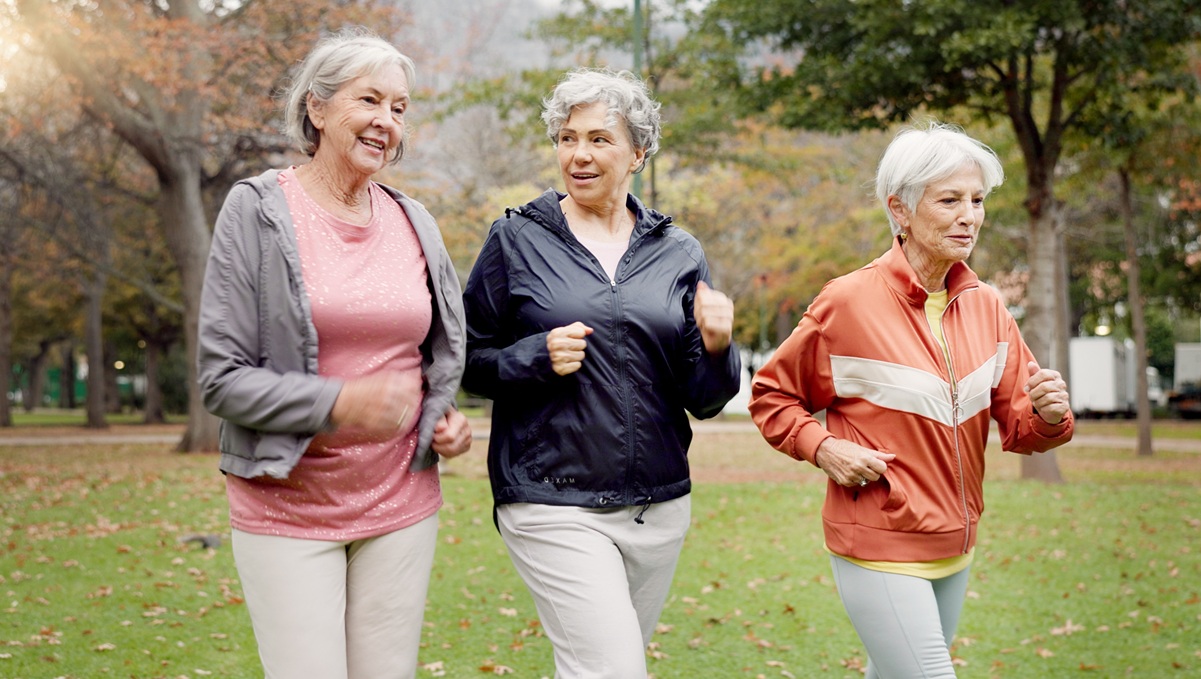
Getting just 4,000 steps per day, once or twice a week, lowers the risk of all-cause mortality and cardiovascular disease.
A little exercise, even at an older age, does a lot of heavy lifting when it comes to reducing the risks of all-cause mortality and cardiovascular disease, according to results from a new study.
Among more than 13,000 older women, those who took at least 4,000 steps per day on just 1 or 2 days per week had significantly lower risks of both all-cause death and a composite of cardiovascular mortality, nonfatal MI, or nonfatal stroke when compared with those who were inactive, investigators report in the British Journal of Sports Medicine.
Rikuta Hamaya, MD, PhD (Brigham and Women’s Hospital, Boston, MA), who led the study, said that when the researchers adjusted the analysis to account for the number of mean daily steps, the association with the weekly activity pattern was fully attenuated.
“That means that the pattern is actually not as important compared with the step count itself,” he told TCTMD.
There is a wealth of evidence showing that physical activity is important for healthy aging, but there remains some uncertainty about the best dose. While 10,000 steps per day was once held as the benchmark, studies have mostly debunked this magical number, with research suggesting the health benefits, including remaining free from cardiovascular disease, occur at lower thresholds.
As people age, say the researchers, one question that emerged is how little exercise is needed to achieve the health benefits. Multiple analyses of “weekend warriors,” those who tend to be quite physically active on Saturday and Sunday but less so during the week, have shown that this type of activity pattern is also associated with lower risks of mortality and cardiovascular disease. However, less is known about the pattern of activity with less-intensive exercise.
“Walking is more relevant for an older population,” said Hamaya. “Younger people are more likely to engage in sports, in moderate-to-vigorous activity, but the older population can’t do that. They prefer walking.”
The present study included 13,547 women (mean age 71.8 years) free from cardiovascular disease and cancer enrolled in the Women’s Health Study (WHS). Those in the study wore an accelerometer for 7 consecutive days between 2011 and 2015, then were followed for a median of 10.9 years.
In total, 1,639 had no days where they achieved 4,000 steps or more, 1,846 had 1 to 2 days where they walked that amount, and 10,062 achieved that mark on 3 or more days. Those who walked at least 4,000 steps on multiple days were more younger, had a lower body mass index, and had better self-rated health. The 4,000 steps per day threshold was selected as prior analyses have shown that mortality was lower in those who hit this mark, with the dose-response relationship leveling off around 7,500 steps per day, say researchers.
Compared with women who didn’t achieve 4,000 steps on any day, those who did so on 1 to 2 days and on 3 or more days had significant 26% and 40% lower risks of all-cause mortality. With respect to cardiovascular disease, the risks were 27% lower in those who achieved 4,000 steps per day on 1 to 2 days as well as in those who met that threshold on 3 or more days per week.
When the model was adjusted to account for the daily step count, the association was attenuated, “indicating the inverse relationship results from the volume rather than the number of days reaching more than 4,000 steps,” say researchers.
At 5,000, 6,000, and 7,000 steps per day, the risk of all-cause mortality, but not the risk of cardiovascular disease, further declined modestly. For example, reaching at least 7,000 steps on 3 or more days per week was associated with a 32% reduction in the risk of death and a 16% reduction in the risk of cardiovascular disease compared with those who never hit 7,000 steps.
To TCTMD, Hamaya said the study shows that even a modest recommendation—that older women need to take just 1 or 2 days out of the week to walk—can have significant health benefits. “A small engagement in walking can dramatically reduce the risk of cardiovascular disease,” he said.
The US physical activity guidelines, published in 2018, are due for an update in 2028, and Hamaya hopes the recommendations will focus on step count rather than the activity pattern. There is no “best” way to take steps, and people “can undertake physical activity in any preferred pattern,” say the researchers. Their data also suggest that the health benefits, at least on cardiovascular outcomes, may occur at a lower step count in older women.
Hamaya said the study is observational and, with that, there are limitations to the analysis. Only a single assessment of physical activity was taken, and that doesn’t account for variations in activity over time. However, there are data from the WHS showing decent stability of exercise patterns among participants with multiple accelerometer measurements, the researchers say.
link


:max_bytes(150000):strip_icc()/A-Physical-Therapist-Shares-the-Most-Underrated-Physical-Activity-94666d193c98412ca90ffbcc23339f90.jpg "Experts Say This Exercise Is the Most Underrated")