15 Fruits for Weight Loss, According to a Dietitian
:max_bytes(150000):strip_icc()/Health-GettyImages-1400452836-3srgb-006494bace2046aa9fd4082cd6cfc992.jpg "15 Fruits for Weight Loss, According to a Dietitian")
Fruit can support your weight loss goals. Some of the best fruits for weight loss include apples, grapefruit, oranges, and watermelon.
Fruit is sweet and contains naturally occurring sugar, so many people assume it is associated with weight gain. Research has consistently shown that eating fruit supports healthy weight loss.
Increasing your daily consumption of whole fruits is inversely tied to weight gain. Eating whole fruit reduces the likelihood of long-term weight gain by curbing total calorie intake.
Whole fruits require chewing slowly and provide fiber and water, which increase fullness and delay hunger. Vitamins A, E, and C and antioxidants like polyphenols help reduce weight gain and visceral (belly) fat. Fiber and antioxidants also shift gut bacteria in ways that may protect against obesity.
shene / Getty Images
Apples are rich in polyphenols and anti-inflammatory antioxidants. They are also high in fiber. One medium apple with skin provides over 4 grams of fiber, or 14% of the Daily Value (DV).
Eating an apple before a meal can reduce the amount of calories you consume. The effect is not the same when eating applesauce or apple juice. The fiber in solid fruit affects fullness more than pureed fruit or juice.
Westend61 / Getty Images
Despite its higher fat and calorie levels compared to other fruits, avocado can help manage weight. In one study, women who ate one avocado daily for 12 weeks had reduced belly fat and a lower ratio of belly to subcutaneous (under the skin) fat.
Erika Bunea / 500px / Getty Images
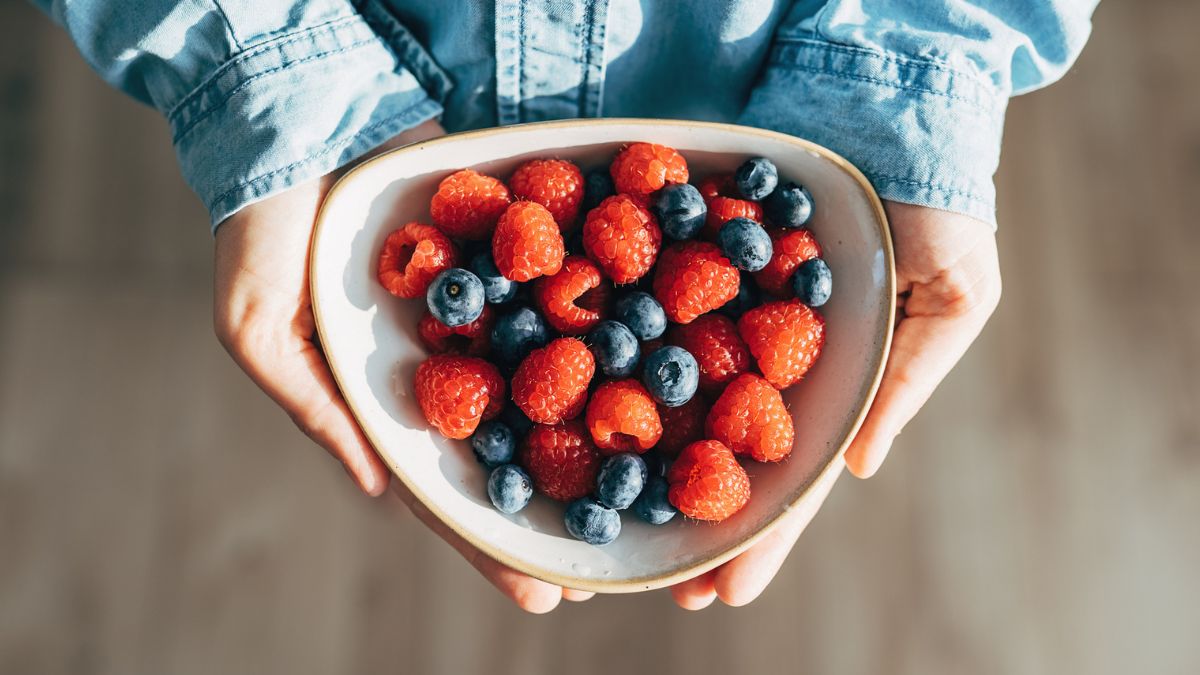
Blueberries have about 85 calories per cup. Anthocyanin antioxidants found in blueberries can support weight loss. Higher anthocyanin intakes have been associated with 3-9% lower fat mass and less midsection fat in healthy female twins.
Aleksandr Zubkov / Getty Images
Consuming both sweet and tart cherries has been shown to improve sleep quality and quantity. People who regularly sleep less than seven hours per night are more likely to develop obesity compared to those who sleep more.
Effects have been seen within three days of consuming 25 sweet cherries per day. This portion provides 110 calories and nearly 4 grams of fiber.
Arx0nt / Getty Images
One study found that people with type 2 diabetes who ate three dates daily for 16 weeks did not gain weight and had reductions in total and low-density lipoprotein (LDL) cholesterol. The participants’ HbA1c levels also did not change.
Alexander Spatari / Getty Images
One half of a pink or red grapefruit provides about 52 calories, 8.5 grams of sugar, and 2 grams of fiber. Regular grapefruit eaters have been shown to have lower body weight, insulin resistance, and waist circumference and a higher metabolic rate.
Grapefruit juice can negatively interact with certain medications. It is best to consult with a healthcare provider before adding grapefruit into your diet.
Photo by Cathy Scola / Getty Images
One kiwi provides about 50 calories and less than 7 grams of sugar. Like cherries, kiwis have been shown to improve sleep.
In one study, 22 young adults who were overweight or had obesity ate two golden kiwis every day for six weeks. The kiwi eaters had significant decreases in inflammatory markers, blood pressure, and body fat.
olgakr / Getty Images
The consumption of lemons can aid in weight loss. One whole lemon provides under 20 calories, less than 2 grams of sugar, and 38% of the DV for vitamin C.
You can consume the flesh of lemons, but most people incorporate the juice from lemons into water, tea, salad dressings, and sauces. Just be aware that lemon juice can erode tooth enamel. Talk to a dentist about how to best protect your teeth before consuming it regularly.
Mur Jito / 500px / Getty Images
A seven-year data analysis found that body weights and waist measurements were significantly lower in male mango eaters compared to males who did not eat mangos.
The mango group also had significantly higher fiber, magnesium, potassium, folate, and vitamins A, C, and E intakes and lower added sugars and cholesterol intakes. There were some limitations since this was an observational study, so more research is needed.
One cup of mango provides about 100 calories. It also has 25 grams of carbohydrates, of which nearly 23 grams are naturally occurring sugar.
Diana Miller / Getty Images
One orange provides 77 calories and 86.5 milligrams of vitamin C, or 96% of the DV. Vitamin C supports immune, bone, and skin health and collagen production.
People who are overweight or have obesity may need to consume more vitamin C to achieve the DV. Poor vitamin C levels can increase the risk of several diseases, including heart disease.
gresei / Getty Images
The compounds in pears help reduce blood sugar, curb inflammation, and support lung and heart health. Pears have been shown to lower waist measurements and waist-to-hip ratios.
One pear provides 106 calories, and about 30% of the nearly 6 grams of fiber in a pear is soluble fiber. Soluble fiber can support weight loss and improve insulin metabolism.
Tuncmemo / 500px / Getty Images
One cup of pomegranates has 145 calories and 7 grams of fiber, or 25% of the DV. They are also rich in polyphenol antioxidants that help reduce inflammation and prevent disease.
Polyphenols also might have anti-obesity effects. This may be due to their anti-inflammatory properties, promotion of fat breakdown in the body, and positive impact on the makeup of gut bacteria.
Yevgen Romanenko / Getty Images
One cup of fresh raspberries provides 78 calories and about 18 grams of carbohydrates. Nearly 10 grams of carbohydrates are from fiber, and 7 grams are from naturally occurring sugar. Raspberries can regulate post-meal blood sugar levels, which may prevent obesity.
Dove Lee / Getty Images
One cup of raw strawberries provides 52.5 calories and 11 grams of carbohydrates, 3 grams of which are fiber. Berries have been proposed as a treatment for obesity-related inflammation. This condition increases the risks of type 2 diabetes, heart disease, and cancer.
HUIZENG HU / Getty Images
One cup of watermelon provides 46.5 calories and about 12 grams of total carbohydrates, with about 10 grams as sugars and the remainder as fiber.
The water, antioxidants, and fiber in watermelon can support weight loss. Watermelon has been shown to lower body weight, systolic blood pressure (the top number), and oxidative stress that leads to cell damage.
Whole fruits support weight management. Fruit juice, which is low in fiber and more concentrated in calories, has been shown to cause weight gain in children.
Until more studies are available, the guidelines on fruit juice from the Dietary Guidelines for Americans (DGA) should be followed. Daily consumption of small amounts of 100% fruit juice may be part of a balanced diet.
According to the DGA, the recommended intake of fruit is two cups daily as part of a 2,000-calorie diet. Some evidence suggests that 12.3% of adults meet the recommended daily intake of fruit.
Here are a few ways to incorporate fruit into your diet:
- Add fruit to vegetable dishes, like entree salads, stir-fries, and slaws
- Blend fresh or frozen fruit into a smoothie along with leafy greens, lean protein (like tofu or Greek yogurt), and nuts
- Choose fruit as an alternative to candy or baked goods
- Snack on fruit combined with a protein and healthy fat from nuts, seeds, or hummus
Some of the best fruits for weight loss include apples, grapefruit, oranges, and watermelon. It is important to consume a variety of fruits in color and type to broaden your overall nutrient intake.
Consult a healthcare provider if you have questions or concerns about eating for weight loss or adding fruit to your diet.
link